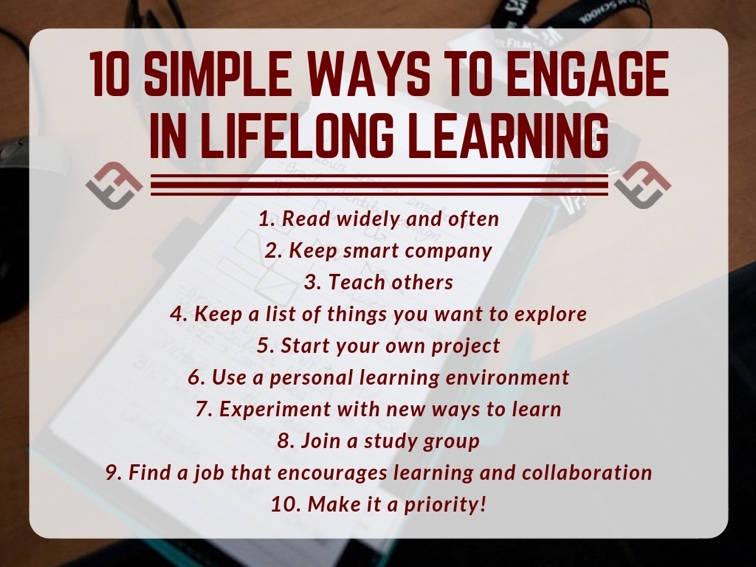
Lifelong learning is described as “purposeful learning, occurring among adults on an ongoing basis with the aim of improving skills or acquiring knowledge or competencies” (Head A, 2015)

It’s never been so important for teachers to develop skills in their students that will ensure they will be actively involved with learning over their lifetime (Howell, 2012). Our world is constantly shifting. New technologies are being created all the time. Learning is no longer restricted to the formal years of schooling and university. There is an expectation, of students, parents, employers and the government (Howell, 2012), that students will finish school with an understanding of digital technology that will equip them to fulfil basic functions in a workplace, but education does not stop there. It is estimated that the average 15 year old in 2017 will experience 17 job changes and 5 careers over their lifetime (Walsh, 2017). They need to be prepared for change and learning new skills.
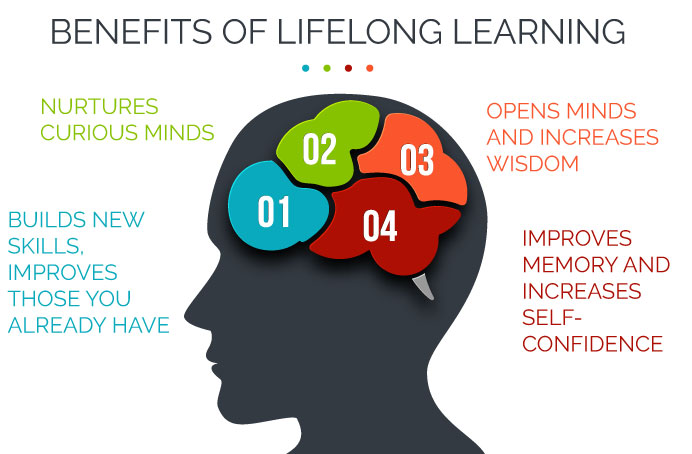
A desire to use digital technologies to continue learning beyond formal schooling is increasingly becoming an expectation and natural progression. We google answers to almost everything. Artificial intelligence is becoming part of our everyday lives (Scott, 2017) It is estimated that 16.69 million smartphones are in use in Australia, and that number rises every year (Unknown, 2019). It goes without saying then, that information and communication technology (ICT) as a teaching platform will become the way of the future in education beyond formal learning years. ICT gives way to greater participation in education and training and more diverse learning options (Selwyn, 2006).
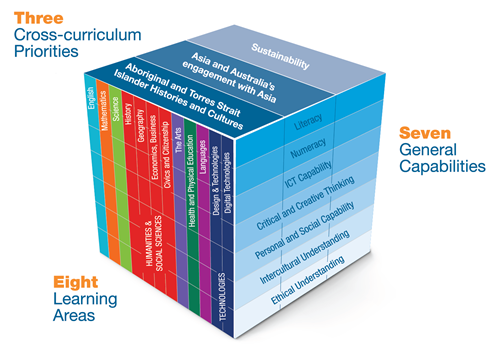
The Australian Curriculum includes education in ICT to ensure students have adequate knowledge to be able to “access, create and communicate information and ideas, solve problems and work collaboratively in all learning areas at school and in their lives beyond school” (Information and Communication Technology (ICT) Capability, n.d.). The Australian government has recognised a need for ICT training for a “knowledge-based economy” to be able to transfer these skills to all areas of their lives beyond the school years. (Information and Communication Technology (ICT) Capability, n.d.).